Destination Guides
The Great Migration is the greatest wildlife spectacle on Earth. Here's exactly when to go, where to stay, and how to see a river crossing.
The Great Migration is a year-round movement of over 1.5 million wildebeest, 300,000 zebras, and hundreds of thousands of gazelles between Tanzania's Serengeti and Kenya's Masai Mara — chasing the rain and the fresh grass.
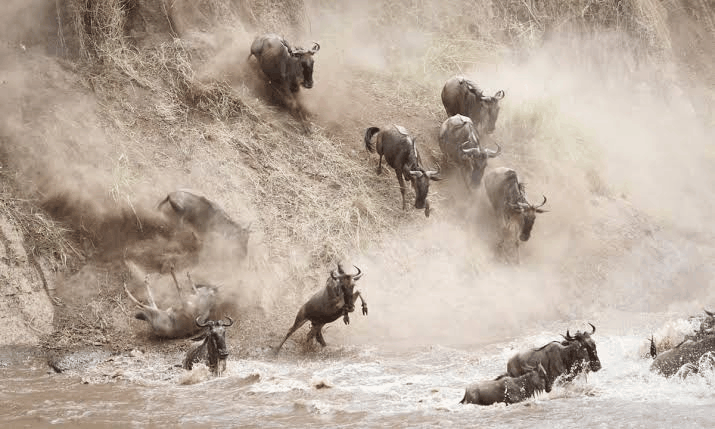
In the Masai Mara, the peak window is July through October. The herds cross the Mara River in dramatic, crocodile-filled spectacles — typically between mid-July and early September, though exact timing shifts every year with the rains.
For the best chance of a river crossing, stay 3 to 4 nights inside the reserve or in a conservancy bordering the river (Mara North, Olare Motorogi). Conservancy stays mean fewer vehicles at sightings and the option to do walking and night safaris.
Book 9 to 12 months in advance for July to September — the top camps sell out a year ahead. We can secure lodges, light-aircraft flights from Nairobi and an experienced migration guide as part of any tailor-made itinerary.
The crossing lasted 40 minutes. Thousands of wildebeest, crocodiles, chaos. Then silence. Then the next wave began. Nothing prepares you for it.
Between July and October, wildebeest herds of tens of thousands gather on the banks of the Mara River before launching themselves across. Crocodiles wait in the water. Lions watch from the banks. The crossing can last minutes or hours, with multiple waves surging back and forth. It is chaotic, violent, and extraordinary — a raw natural spectacle that cannot be manufactured or predicted.
Stay a minimum of 3 to 4 nights in the Mara or a bordering conservancy. Position yourself at crossing points early and wait — crossings cannot be scheduled. A good guide with radio contact to other vehicles dramatically improves your odds. Mara North, Olare Motorogi, and Naboisho conservancies offer excellent crossing access with fewer vehicles than the main reserve.
The migration is not only about the river crossing. The arrival of 1.5 million wildebeest draws the Mara's lion prides, cheetah coalitions, and leopards into concentrated predator action unlike anything seen at other times of year. Kills happen daily. The general game viewing during migration season is the best in Africa.
If you cannot travel in July to October, January to March in Tanzania's Serengeti offers the calving season — 8,000 wildebeest calves born per day in the southern Serengeti. Predator activity is extraordinary as cheetahs, wild dogs, and lions hunt the vulnerable newborns. The calving plains at Ndutu are one of Africa's most electric wildlife environments.
Tell us your dates and interests — we will design a private safari built around them.
July through October is the peak window for Mara River crossings in Kenya. The herds typically arrive in the Mara in late June or early July, with crossings peaking in August. Exact timing shifts every year with the rains.
No wildlife experience is guaranteed, but the migration is the most reliable large-scale wildlife spectacle in Africa. With 3 to 4 nights in the Mara during peak season and a knowledgeable guide, the odds of witnessing a river crossing are very high.
9 to 12 months in advance for July to September. The top camps in the Mara conservancies sell out a full year ahead. Blue Lilac secures allocations with lodges for the following season — contact us early.
Conservancies (Mara North, Olare Motorogi, Naboisho) offer night drives, walking safaris, off-road driving, and far fewer vehicles at sightings. For the migration, they also provide excellent access to crossing points. Blue Lilac recommends conservancy stays for the most complete experience.
Tell us your dates and interests — we will design a private safari built around them.